Category

Blog

Indonesia’s “John Adams Moment”

By All Southeast Asia, Articles, Blog, Indonesia, Indonesia

 July 30, 2014

(Originally published by the Center for Strategic and International Studies (CSIS) and can also be found also at: https://www.csis.org/analysis/pacnet-62-indonesia%E2%80%99s-john-adams-moment )

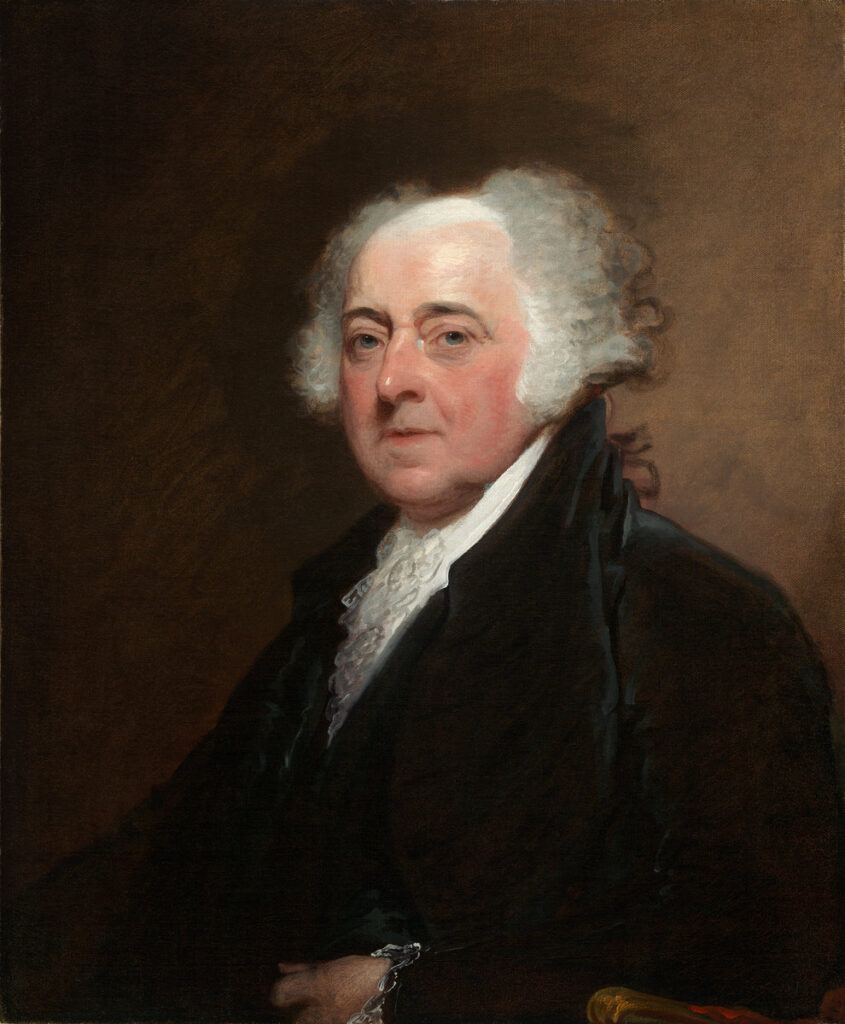
          There was a moment of time in our own history, when our new democracy peaceably and orderly passed the reins of power from George Washington, at the end of his second term, to John Adams. It had never happened before in history. The “John Adams Moment” firmly established

the precedent  in the new, American democracy, of a Presidency limited to only 2 terms. That tradition lasted up until the time Franklin Roosevelt and was resumed thereafter by Constitutional Amendment. It was a transition moment when the country broke away peacefully from a military/civilian leader, Washington, to a purely civilian leader, John Adams. Our own “John Adams Moment” set the tone and the tradition for generations that followed. Indonesia, following its recent divisive election, is at a similar, “John Adams Moment” in the strengthening of its own new democracy. President Susilo Bambang Yudhoyono  (SBY),  a military/civilian leader, will step down after his own 2nd term this coming October, and relinquish power to a new, duly- elected civilian President, Joko Widodo (Jokowi).  This is a historic, critical step in the development of Indonesia’s own, young democratic traditions.

The Indonesian democracy has developed out of the dark, bloody days of rioting and violence in the wake of the collapse of the Thai baht and the Asian Financial crisis in 1997-98. The financial implosion of Indonesia’s rupiah occurred along with the dismantling of the autocratic and highly corrupt Suharto regime. Since that time, Indonesia has re-invented herself in a little over a decade and a half, repaired her devastated economy, and has now emerged as a robust democracy in Southeast Asia, with a plethora of newspapers, talk shows, media sources, and strong voter participation.  It is impressive progress in less than two decades.

The recent Presidential election campaign was a hard-fought battle, but free of violence. And, although religion is never entirely absent from Islam’s foremost democracy, this was a contest fought overwhelmingly over secular issues.

Jokowi, represents a marked departure from Indonesia’s past. He started out as a small business owner, a humble furniture seller, and became a pragmatic, uncorrupt mayor. He is not from the usual clutch of political and business dynasties and their sleazy cronies. He represents something new for Indonesia. The 53-year-old is the first of a political generation reaching the national stage since popular protests in the late 1990s that toppled Suharto. Jokowi’s rise would have been inconceivable without the radical political decentralisation which is perhaps the outstanding success of Indonesia’s democratic journey. He began his political career as mayor of Solo, a medium-sized city in Java, the most populous island, before becoming an immensely popular Governor of Jakarta, the capital, in 2012. It is there that he forged a reputation for can-do competence and clean government that won the admiration of many and propelled him into the Presidential race.

Jokowi has a good record of dealing with the concerns of ordinary Indonesians: clogged traffic, poor sanitation and petty, bribe-taking bureaucrats. He is also more comfortable working with Christians or ethnic Chinese than most Indonesian politicians have been and are. Indeed, his opponents tried to turn his hostility to religious intolerance against him by claiming that he was in fact a Christian. Certainly, Jokowi is a new kind of Indonesian leader, but he is still a devout Muslim. In the three days before actual election in which Indonesian law forbids campaigning, Jokowi made a lightening pilgrimage to Mecca. But he also embraces religious pluralism. And, though no room exists on the Indonesian political spectrum for anything like economic liberalism, he is less of an economic nationalist than his opponent in the election, former Special Forces General, Prabowo Subianto, once Suharto’s son-in-law with a tainted human rights record, a throwback to Indonesia’s darker past.

Foreign investors are now pleased with the Jokowi victory. He understands the need to cut ruinous fuel subsidies and to boost education.

The big worry about Jokowi is that he might be out of his depth in high politics. That is partly because he lacks experience: his views on foreign policy are still barely known. His campaign was amateurish, relying mainly on the perhaps, naive assumption, that honesty and an impressive record would be good enough. It turns out that Jokowi was right; Indonesians did not buy the slick, orchestrated campaign of General Prabowo. Jokowi is a man of the streets and neighborhoods, whereas past Indonesian leaders have ruled from on high. He has no ties to the Suharto regime, unlike most of his predecessors, and that represents a clean break.

Jokowi has been underestimated before. Indonesia faces a geopolitical challenges with China over its Natuna islands in the South China Sea along with its ASEAN leadership demands and international economic challenges. Standing still will not be the easiest option. Indeed, his capacity to attract powerful technocratic advice could see Jokowi pursue a more proactive and internationalist agenda than his predecessors.

Jokowi’s endearing trait—his humility—turned into a liability during the campaign as his image as an outsider was compromised by his reliance on his party’s grande dame, Megawati Sukarnoputri, the daughter of modern Indonesia’s founder and a former President herself. She has appeared on occasion to be grudging in her support for Jokowi. This reliance is likely to fade in time as Jokowi makes his own mark.

There is a leadership trait which Jokowi possesses which is both visionary and courageous. As the world’s 4th largest country, and a Muslim-majority one at that, the ethnic Chinese have been the political scapegoats forever. During the Suharto years, a drive through Jakarta’s Chinatown, Kota, was remarkable for its lack of Chinese characters, symbols, architecture and even names in English—the ethnic Chinese were literally hidden from view. The bloody anti-Chinese riots (which General Prabowo is said to have encouraged) in Kota and elsewhere left deep cultural wounds.  Jokowi is the first Indonesian politician to actively begin the healing process. When he ran for the Governorship of Jakarta, Jokowi had the courage to have an ethnic Chinese, Basuki Tjahaja Purnama (Ahok) as his successful running mate.  That was a historic first for Indonesia and it bodes well for Jokowi’s reputation as a cultural healer, a nation-builder, and a diplomat. Interestingly, Ahok now succeeds Jokowi as the Governor of Jakarta.

In the end, Indonesians, made the right choice. Jokowi will be a disruptive figure in in that he will have to learn to work with, and begin to breakup, the old political oligarchy, upgrade the bureaucracy, work the corruption problem, develop civilian control of the military, and continue to strengthen this fledgling democracy.

This is Indonesia’s “John Adams Moment.”

(David Day is the Chairman of the Board of the Hawaii Indonesia Chamber of Commerce and an international business lawyer).
A Gift For You

By Blog, Economics, Economics

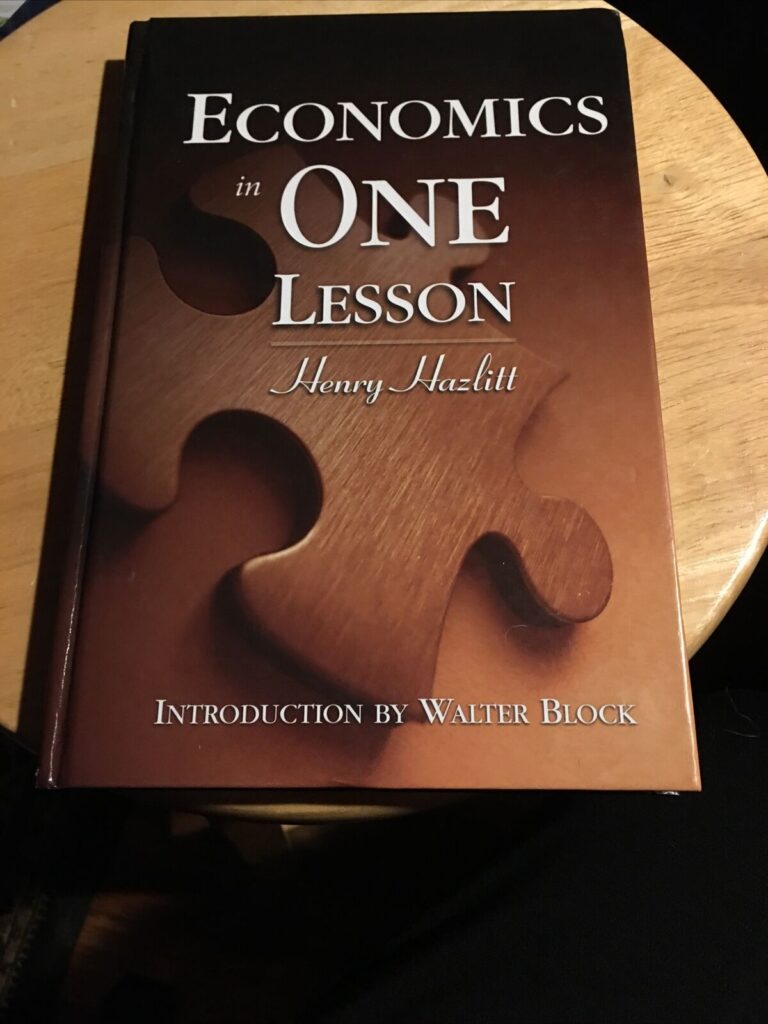
This is our gift to you: “Economics in One Lesson” by Henry Hazlitt                  Hazlitt book jacket

You will find the downloadable pdf  version below.

Our gift is the effort to get a copy into your possession in the hopes that you will read it. We also encourage you to forward copies to everyone that you know, including family, friends, business associates, and in particular give copies to every young person that you can. The book is an easy read, but contains wisdom that is often hard to come by these days.

Here is why we feel that this book is so important:

Most of the critical problems that we are facing in this country today stem from a rampant ignorance of basic economics. A Congress and an electorate that understood simple economics would never have allowed us to get into the budgetary wastefulness and debt crisis that the country now faces. Many people fail to understand that the laws of economics are like the laws of gravity–you ignore them at your peril.

Unfortunately most of our schools don’t teach this, and our children graduate without the necessary knowledge needed to make sound financial and life altering decisions in later life. This book is only a start, but it can be the seed that germinates into the fruit that drives the quest for knowledge and truth. This is true regardless of your political leanings or religious beliefs, and we truly hope that you will benefit from it.

Here is the book description as listed at the Mises Institute, where this and many other related books can be found:

Henry Hazlitt wrote this book following his stint at the New York Times as an editorialist. His hope was to reduce the whole teaching of economics to a few principles and explain them in ways that people would never forget. It worked. He relied on some stories by Bastiat and his own impeccable capacity for logical thinking and crystal-clear prose.

He was writing under the influence of Mises himself, of course, but he brought his own special gifts to the project. As just one example, this is the book that made the idea of the “broken window fallacy” so famous. Concise and instructive, it is also deceptively prescient and far-reaching in its efforts to dissemble economic fallacies that are so prevalent they have almost become a new orthodoxy.

This is the book to send to reporters, politicians, pastors, political activists, teachers, or anyone else who needs to know. It is probably the most important economics book ever written in the sense that it offers the greatest hope to educating everyone about the meaning of the science.

Many writers have attempted to beat this book as an introduction, but have never succeeded. Hazlitt’s book remains the best. It’s still the quickest way to learn how to think like an economist. And this is why it has been used in the best classrooms for more than sixty years.”

Economics in One Lesson

China’s Next Moves Following its East China Sea ADIZ

By All Southeast Asia, Blog, China, China, Critical National / Regional Security Issues, Foreign Policy/Geopolitics, Japan, Japan, Korean Peninsula, Military, Mongolia, Northeast Asia, Our Media, Philippines, PRC/China, Regional Security/Flashpoints, Russia, Russia, Senkakus, South China Sea Claims, South Korea, South Korea, Taiwan Straits, Vietnam, Vietnam

So what are China’s next strategy moves in the Asia-Pacific Region? What does the PLA really think about the U.S. military and its capabilities? –a bizarre perception that encourages them to push harder now.

China has now been successful at establishing its Air Defense Identification Zone (ADIZ) in the South China Sea. In the process, we have seen a bizarre, almost schizophrenic, series of contradictory communications on the subject coming out of Washington that have enhanced China’s successful roll-out.

Following the roll-out,  China’s lone aircraft carrier (sans aircraft) departed for the South China Sea for a “show the flag” cruise. Next, we witnessed a near collision by U.S. and Chinese naval ships in the South China Sea.

This program is Part 2 of the conversation between  David Day and China-Hand Michael Sacharski. Mr. Sacharski has spent some 3+ decades in China, met and worked with various members of its leadership and has fascinating perspectives to share about China’s ADIZ planning & gameplan, its unexpected success in the imposition of its new ADIZ in the East China Sea, and what strategic moves we can now expect China to make in the Asia-Pacific Region in the near term. Mr. Sacharski is the CEO of Pacific Enterprise Capital.

China’s New ADIZ

By Blog, China, China, Critical National / Regional Security Issues, Foreign Policy/Geopolitics, Japan, Japan, Korean Peninsula, Military, Northeast Asia, Our Media, PRC/China, Regional Security/Flashpoints, Senkakus, South China Sea Claims, South Korea, South Korea, Taiwan, Taiwan Straits

Are there unusual crossovers of the new China ADIZ (Air Defense Identification Zone) with both Taiwan and South Korea? There are and the Taiwan piece is perhaps something that most people do not know.   Is China’s new ADIZ over the Senkaku islands a precursor to further ADIZs China may have in mind? What is this new Air Defense Zone that China has imposed in the East China Sea all about? How did we get here? What about the schizophrenic, wires-crossed responses coming out of the Pentagon and the State Department? 


[soliloquy id=”4254″]


Asia in Review” host David Day engages in a fascinating conversation with special guest Michael Sacharski. Mr. Sacharski has lived and worked in China as an American executive and entrepreneur for some 3+ decades and shares some interesting insights into the Chinese thinking behind this new strategy. Mr. Sacharski is the CEO of Pacific Enterprise Capital.

Philippine Nightmare: Typhoon Haiyan

By All Southeast Asia, Blog, Disaster Prep & Humanitarian Aid, Our Media, Philippines
[soliloquy id=”4117″]


Haiyan has devastated parts of the Philippines beyond recognition. Where are we? What is happening on the ground? What kind of recovery period are we looking at?

“Asia in Review” host David Day engages in an important and fascinating conversation about this terrible disaster with special guests Vice Consul Joy Santos of the Philippine Consulate, Ray Shirkhodai, the Executive Director of the Pacific Disaster Center on Maui,  along with Dr Heather Bell, also of the Pacific Disaster Center.

What Could Have Been

By All Southeast Asia, Articles, Blog, Ho Chi Minh, Vietnam, Vietnam, Vietnam History-related
[soliloquy id=”3889″]

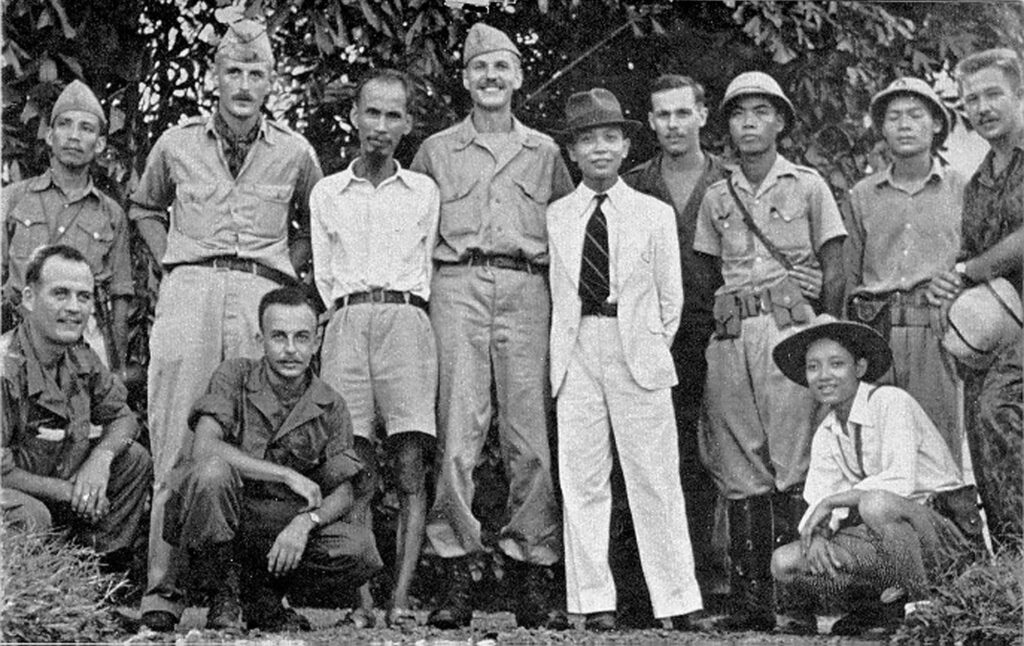
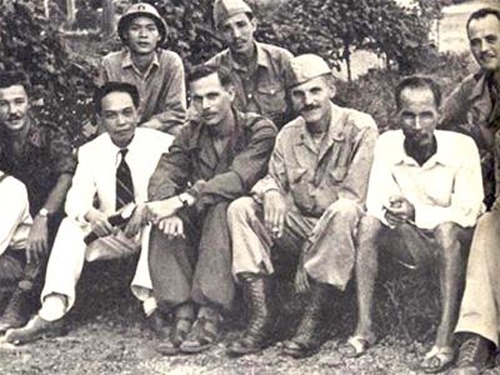
In the wake of the state funeral for Vietnam’s legendary General Vo Nguyen Giap, we thought it appropriate to share with you some heartbreaker photos taken in August of 1945 in the mountains outside of Hanoi. They are heartbreakers only if you recognize what could have been, instead of the carnage that followed.

We do not ascribe blame for the failure to build on this relationship but only want to point out that it did not happen and perhaps, could have.

American OSS Deer Team with Ho Chi Minh & Vo Minh Giap August, 1945 Pac Bo, Vietnam

American OSS Deer Team with Ho Chi Minh & Vo Nguyen Giap
August, 1945
Pac Bo, Vietnam

In the  photo above, American OSS (Predecessor to the CIA) “Deer Team” members pose with (then) Viet Minh leaders Ho Chi Minh and Vo Nguyen Giap during a military training at Tan Trao, in the mountains north of Hanoi in August, 1945. Deer Team members standing, l to r, are Rene Defourneaux, (Ho Chi Minh), Allison Thomas, (Vo Nguyen Giap), Henry Prunier and Paul Hoagland, far right. Kneeling, left, are Lawrence Vogt and Aaron Squires. (Rene Defourneaux).

Ho Chi Minh, Vo Nguyen Giam, and the Deer Team 1945

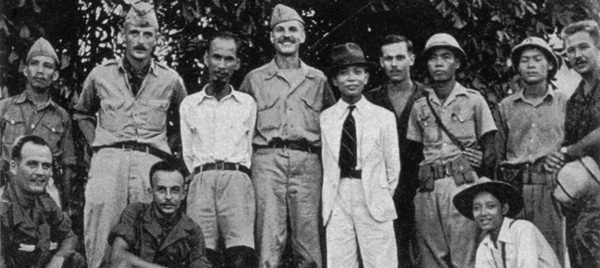
Ho Chi Minh, Vo Nguyen Giap (in the white suit), and the Deer Team
1945

Toward the end of World War II, the U.S. Office of Special Operations (the OSS), the precursor to the CIA, started doing business with the communist-dominated Viet Minh, led by the ascetic and mysterious globe trotter Ho Chi Minh. The aim was to use the Viet Minh to drive the Japanese out of what had been French Indochina. But events were moving way too fast for coherent American policy to be made.

In return for the Viet Minh’s help against the Japanese, the OSS provided the Communist-dominated group with weapons, radio sets, medicines and training. The two groups quickly became very friendly and fought as comrades-in-arms in capturing the Japanese garrison at Tan Trao. They celebrated by getting drunk together. Along the way there would be such incongruous (in retrospect) actions as an OSS medic saving the life of the very sick Ho Chi Minh.

[soliloquy id=”3894″]

The Japanese, traumatized by Hiroshima and Nagasaki, surrendered much earlier than expected.  Ho’s forces declared independence the very same day that General MacArthur accepted the formal Japanese surrender on the deck of the USS Missouri, September 2, 1945.  In so doing, Ho’s Viet Minh looked to America for friendship and even included some phrasing from the American Declaration of Independence in their own, with Ho carefully checking the words of Thomas Jefferson with his OSS colleagues by radiophone from a shophouse in Hanoi’s Old Quarter as it was being drafted.

The Vietnamese Declaration of Independence that Ho Chi Minh drafted begins:

“To the compatriots of the entire country,

All men are created equal; they are endowed by their Creator with certain inalienable Rights; among these are Life, Liberty, and the pursuit of Happiness. This immortal statement was made in the Declaration of Independence of the United States of America in 1776. In a broader sense, this means: All the peoples on the earth are equal from birth, all the peoples have a right to live, to be happy and free…”

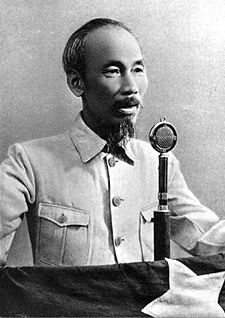
Ho Chi Minh delivering the Declaration of Independence for the Democratic Republic of Vietnam, September 2, 1945 Ba Dinh Square, Hanoi

Ho Chi Minh delivering the Declaration of Independence for the Democratic Republic of Vietnam, September 2, 1945
Ba Dinh Square, Hanoi

Ho was clearly influenced by the political writings and values of the American Founders. Up on the stage at Ba Dinh Square in Hanoi, clear for all to see, OSS Major Archimedes Patti stood behind Ho. There are photos of Patti saluting the Vietnamese flag as the band played the Vietnamese and the US national anthems. Then, coincidentally, a clearly-marked U.S. plane flew over  Ba Dinh Square during the ceremony. Was it by accident or design? It remains a mystery. Either way, it was apparent to everyone in the square that day that Ho Chi Minh (and Vo Nguyen Giap) had powerful backers and that the forces of Ho Chi Minh were clearly the political and spiritual leader of the Vietnamese revolution against the country’s French overlords.

Meanwhile, Chiang Kai-Shek’s undisciplined and rapacious troops, defeated Japanese forces, some French military people and colons and a few bemused Americans all milled around in Hanoi waiting for resolution of the dangerous and confused situation in which Indochina found itself at the end of World War II.

The U.S. adventure in Hanoi ended quickly, and it swiftly became clear that the French would fight to regain their lucrative colonies in Indochina. After all,  because the mother country was, at the time, reduced to rubble–it was critical for France that she quickly re-open her colonial cash pipeline from Vietnam in the rubber, tin and other profitable Vietnamese exports of that era.

Following the Japanese surrender on September 2, 1945, the French began to return to Hanoi and Saigon and made it clear that they had no intention of abandoning the colony.  In an effort to block the French return, Ho Chi Minh sent several telegrams to Washington seeking assistance against the French. These telegrams were written by Ho personally, and typed on his own typewriter. The telegrams were addressed to President Truman, sent via the State Department, but, oddly, never delivered to Truman. Here is one of several Ho sent in 1946:

Ho Chi Minh Telegram to President Truman February 1946

Ho Chi Minh Telegram to President Truman
February 1946


 At the same time, bewildered U.S. policy makers in the inexperienced Truman administration were dealing with domestic pressures to send U.S. forces home and anxiety about upsetting the French. While the precise point at which the Truman Administration turned its back on Vietnam is unclear, we do know that France was desperate to re-start its colonial cash flow and de Gaulle, always playing hard to get, was dragging his feet during the negotiations on French participation in the precursor to NATO, the Western Union, initiated formally in 1948.

President Truman did not share Roosevelt’s strong democratic principles. He was more concerned with keeping the French happy as a major business and security partner, as well as helping stand that country back upon its feet again. Plus, there was already on the horizon the “Great Imagined Fear” of the Russians, and de Gaulle knew how to play his cards just right. De Gaulle, in mid-march 1945, had already said in discussion with the (then) Roosevelt administration:

“What are you driving at? Do you want us to become, for example, one of the federated states under the Russian aegis? The Russians are advancing apace as you well know. When Germany falls they will be upon us. If the public here comes to realize that you are against us in Indochina there will be terrific disappointment and nobody knows to what that will lead. We do not want to become Communist; we do not want to fall into the Russian orbit, but I hope that you will not push us into it.”

[by, say, letting the Vietnamese have democratic control over their own country].

Truman and the U.S. State Department made no response to Ho Chi Minh’s numerous telegrams seeking assistance against the French. Washington feared that in the chaos and economic distress of immediate post-war France that the communists would take power there. So it pulled back from what had seemed to have been its support for Vietnamese nationalism under the Viet Minh and began to support the French.

The die was cast for a future conflict and, as Minister of Defense during the Vietnam War, Vo Nguyen Giap, would play a crucial role against his old comrades from the United States.

_______________


To learn a little more about this history, check out the following articles:


http://www.historynet.com/ho-chi-minh-and-the-oss.htm

http://www.nytimes.com/2013/04/18/world/asia/henry-a-prunier-army-operative-who-helped-trained-vietnamese-troops-dies-at-91.html?_r=0

The China-U.S. News Media Imbalance

By Blog, China, China, Info Ops & Strategic Communications, Media & Communications, Northeast Asia, Our Media, PRC/China, Strategic Communications & Info Ops

“The first social responsibility and professional ethic of media staff should be understanding their role clearly and being a good mouthpiece.

Journalists who think of themselves as professionals, instead of as propaganda workers, are making a fundamental mistake about identity.”

                                                                                                                                                                                                                                                                                                         –Hu Zhanfan, President of CCTV

     All news media in the People’s Republic of China is state-controlled, with the larger ones (Xinhua, People’s Daily, CCTV) reporting directly to the Communist Party’s Central Propaganda Department (CPD). The watchdog group, “Reporters without Borders,” ranked China 174 out of 179 countries in its 2012 worldwide index of press freedom.  Journalists face harassment and prison terms for violating government censorship rules. Chinese media disseminators usually employ their own monitors to ensure political acceptability of their content.  

Hong Jiang Deputy Director New Tang Dynasty Television (NTDTV) Assoc Prof, UH Manoa

Hong Jiang
Deputy Director (Hawaii)
New Tang Dynasty Television (NTDTV)
Assoc Prof, UH Manoa

    The People’s Republic of China (PRC) has roughly 700 credentialed news media representatives United States. The number of U.S. reporters in China is generally less than 20.  The Chinese reporters are, for the most part, government agents who are allowed free rein in the U.S. to fulfill their mission. Their U.S. counterparts in China work for independent news organizations and are routinely harassed, including having their visas denied or delayed, sources beaten and arrested, travel restricted, and their physical safety threatened. 

Kerry Gershaneck fmr US Govt Public Affairs Official fmr U.S. Marine Officer Senior Associate at Pacific Forum CSIS Adj. Prof. Hawaii Pacific University in Strategic Communications

Kerry Gershaneck
fmr US Govt Public Affairs Official
fmr U.S. Marine Officer
Senior Assoc, Pacific Forum CSIS
Adj. Prof. Hawaii Pacific University in Communications
Strategic Communications Expert

      In this program, “Asia in Review” host David Day engages in a fascinating conversation on this sensitive topic with special guest Ms. Hong Jiang, the Deputy Regional Director (for Hawaii) from the independent US-based TV network, New Tang Dynasty Television (NTDTV) and an Associate Professor at University of Hawaii at Manoa; Also joining Ms. Jiang is Mr. Kerry Gershaneck, a former senior US government Public Affairs official who teaches Strategic Communication at Hawaii Pacific University.

     The show focuses on the implications of this news media coverage imbalance and how it plays into the larger “information war” between the US and the PRC that former Secretary of State Clinton alluded to in testimony before Congress.  Ms. Jiang and Mr. Gershaneck address the question of whether this imbalance now gives the PRC a significant advantage in its “Soft Power” and other “influence operations” directed at the U.S. and what the U.S. can begin to do to level the Information playing field with the PRC.


China’s Trial of the Century: The Real Bo Xi Lai–A Tiger By the Tail

By Anti-corruption, Blog, China, China, Corruption in Business, International Business, Northeast Asia, Our Media, PRC/China

This show is a fascinating, in-depth conversation about the collapse of one of China’s key

Michael Sacharski, CEO Pacific Enterprise Capital

Michael Sacharski, CEO
Pacific Enterprise Capital

Princelings, Mr. Bo Xi Lai. What is different about this program is that the guest, Mr. Michael Sacharski, is a 3+decade American China Hand who has met and spent time with Mr. Bo on several occasions.

The conversation probes Bo’s extraordinary revolutionary pedigree, his rise as a charismatic, anti-corruption mayor of Dalian, moving to other key political positions before his final post as the crime-busting mayor of the huge city of Chongqing. The program includes a conversation about how Mr. Bo departed from the consensus style of the typical senior, Chinese leadership and his political differences with members of the senior leadership.  Interestingly, this discussion includes warnings  to Bo from the Party about his wife, Gu Kai Lai (who is also a Princeling). The conversation includes a discussion of how this trial came about, why the Party is conducting the trial, and the relationship of Mr. Bo’s courtroom defiance to his own father’s conduct during his persecution by the Red Guards during the Cultural Revolution. This interview with Mr. Sacharski examines the interesting quanxi relationship that exists running from Bo Xi Lai’s father, Bo Yi Bo, to Jiang Zemin (Zhang Zemin) to a number of Politboro members, including Xi Jin Ping, and back to Bo Xi Lai, the son.

[soliloquy id=”3512″]


Hosted by David Day, Mr. Sacharski draws upon his extraordinary meetings with the charismatic Mr. Bo and his knowledge of the history and inner workings of the Party to give the viewer a far more complete picture of this, China’s trial of the 21th century. The discussion concludes with a  look towards Mr. Bo’s future and the likelihood that his opera is not over…down, but not out.


Taiwan (Republic of China) at a Dangerous Crossroads

By All Southeast Asia, Blog, China, Critical National / Regional Security Issues, Foreign Policy/Geopolitics, Japan, Military, Our Media, PRC/China, Regional Security/Flashpoints, South China Sea Claims, Taiwan, Taiwan Straits


America’s relationship with Taiwan has waxed and waned since 1949, when Nationalist forces fled there following defeat by the Communists on mainland China in a lengthy and bloody civil war. 

Kerry Gershaneck, former US Marine Officer stationed in Taiwan

Kerry Gershaneck, former US Marine Officer stationed in Taiwan

Following this disastrous defeat and retreat, the US provided the security umbrella and economic incentives that helped propel the Taiwan into one of Asia’s leading economic “Tigers”.  Taipei, in turn, supported US foreign policy and military policies.  In recent years, however, a number of factors have caused that once-close relationship to drift.  Some analysts say that actions by Taiwan and the US have placed Taiwan on a trajectory towards absorption by the PRC. 

 As one analyst noted, “Taipei is doing more damage to its own ability to deter mainland coercion and military attack than any weapon the People’s Liberation Army could conceive. This damage represents a serious threat to Taiwan’s national security, and by extension to the national security of the U.S. and Japan.” And the U.S., for its part, appears increasingly ready to sacrifice its national security and regional stability–and its fundamental beliefs as a nation–by refusing to reverse this drift.

[soliloquy id=”3076″]

David Day hosts this illuminating conversation with Kerry Gershaneck, a former US government official previously responsible for both “front line defense” of Taiwan and for developing key security cooperation programs with its military forces.


North Korea: “The Cheonan Was Bait for an Internal Propaganda Frenzy “

By Articles, Blog, China, Foreign Policy/Geopolitics, Korean Peninsula, North Korea, North Korea, North Korea, North Korea, North Korea: The Cheonan Incident, Northeast Asia, Regional Security/Flashpoints, The Cheonan Sinking

The Cheonan sinking is an important internal propaganda victory that Pyongyang  created. With the loss of 46 South Korean sailors, Washington and Seoul had no choice. They took the bait.  In so doing, they have predictably teed up the opportunity now for Kim Jong Il to do a little defense of the homeland frenzy. This internal, “Defense of the DPRK” propaganda barrage that now follows the Washington Seoul “spanking” is  extremely valuable to the regime to enhance its stability at this delicate and difficult time of transition. The Dear Leader and his elite, inner circle know full well that, given Kim Jong Il’s 2008 stoke, his clock is already in overtime.

While we may never know for sure, the sinking of the Cheonan appears to be part of a deliberate teasing to coax a limited military response out of Seoul and Washington. Given the sophisticated, Kasparov-like chessmaster moves made by Pyongyang (typically outgunning U.S. negotiators concentrating on their checkers board), the Cheonan incident is just one of several moves coming up. Brinksmanship?  Hardly.  Pyongyang knows full well that at worst it faces a limited spanking response like perhaps joint military exercises (for show) or perhaps beefed up security between U.S and ROK forces on the peninsula combined with some rhetoric. Nothing more. Should Seoul engage in even the most benign cross-border military skirmish, Kim Jong Il can  then get away with his slash back and propagandize that as blocking the aggressor from the South, no matter how minimal the “deterrent” response is from Washington and Seoul.

There is another piece to this already complicated puzzle. Kim Jong Il needs a leadership-anointing opportunity to assist his youngest son, the Swiss-educated  Jong-Eun, to obtain some kind of military leadership, albeit limited, in defense of the fatherland. He also needs to cinch down the military power base for Jong-Eun. So how would this work? Whip the country and the KPA into a war frenzy, organize rallies in Pyongyang, put the KPA on alert, cut off trade and communications with the South. Perhaps even give “Brilliant Comrade ” (Jong-Eun) a military leadership role in the slash back exercise which can then be internally propagandized and then jerk him back to safety once the slash back has been undertaken. Military anointment completed and the internal film and propaganda machinery can then be unleashed. But before “Brilliant Comrade” is placed in the limited line of fire, the Dear Leader needed to test the waters and set up the U.S. an South Korean response. Hence, the Cheonan incident. The timing of this Cheonan chess move is not coincidental—the DPRK Party Congress is set to meet in a few weeks and it is likely that Kim Jong il will confirm then that the baton will pass to Jong-Eun.