So what are China’s next strategy moves in the Asia-Pacific Region? What does the PLA really think about the U.S. military and its capabilities? –a bizarre perception that encourages them to push harder now.
China has now been successful at establishing its Air Defense Identification Zone (ADIZ) in the South China Sea. In the process, we have seen a bizarre, almost schizophrenic, series of contradictory communications on the subject coming out of Washington that have enhanced China’s successful roll-out.
Following the roll-out, China’s lone aircraft carrier (sans aircraft) departed for the South China Sea for a “show the flag” cruise. Next, we witnessed a near collision by U.S. and Chinese naval ships in the South China Sea.
This program is Part 2 of the conversation between David Day and China-Hand Michael Sacharski. Mr. Sacharski has spent some 3+ decades in China, met and worked with various members of its leadership and has fascinating perspectives to share about China’s ADIZ planning & gameplan, its unexpected success in the imposition of its new ADIZ in the East China Sea, and what strategic moves we can now expect China to make in the Asia-Pacific Region in the near term. Mr. Sacharski is the CEO of Pacific Enterprise Capital.
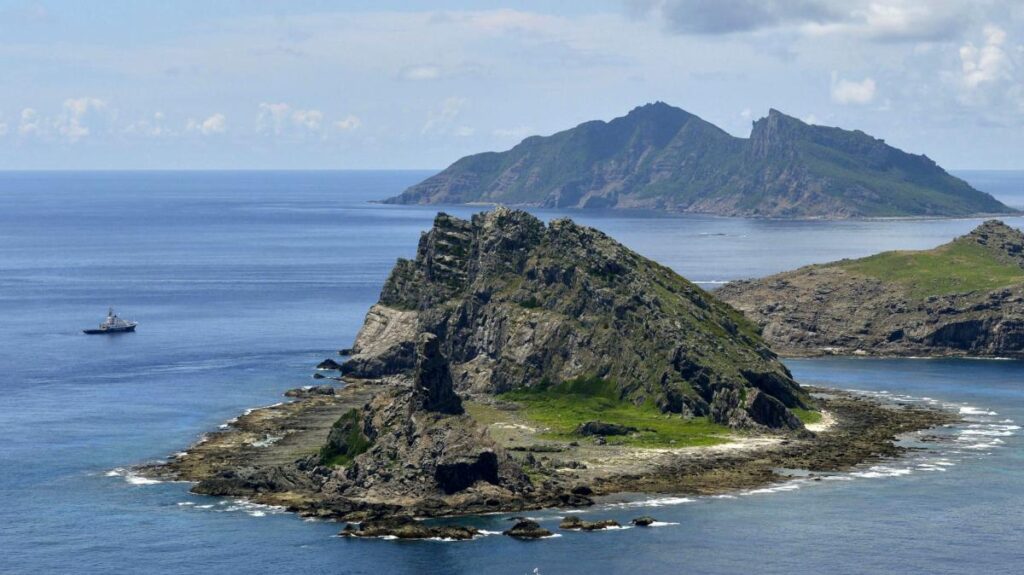
Are there unusual crossovers of the new China ADIZ (Air Defense Identification Zone) with both Taiwan and South Korea? There are and the Taiwan piece is perhaps something that most people do not know. Is China’s new ADIZ over the Senkaku islands a precursor to further ADIZs China may have in mind? What is this new Air Defense Zone that China has imposed in the East China Sea all about? How did we get here? What about the schizophrenic, wires-crossed responses coming out of the Pentagon and the State Department?
[soliloquy id=”4254″]
“Asia in Review” host David Day engages in a fascinating conversation with special guest Michael Sacharski. Mr. Sacharski has lived and worked in China as an American executive and entrepreneur for some 3+ decades and shares some interesting insights into the Chinese thinking behind this new strategy. Mr. Sacharski is the CEO of Pacific Enterprise Capital.
“The first social responsibility and professional ethic of media staff should be understanding their role clearly and being a good mouthpiece.
Journalists who think of themselves as professionals, instead of as propaganda workers, are making a fundamental mistake about identity.”
–Hu Zhanfan, President of CCTV
All news media in the People’s Republic of China is state-controlled, with the larger ones (Xinhua, People’s Daily, CCTV) reporting directly to the Communist Party’s Central Propaganda Department (CPD). The watchdog group, “Reporters without Borders,” ranked China 174 out of 179 countries in its 2012 worldwide index of press freedom. Journalists face harassment and prison terms for violating government censorship rules. Chinese media disseminators usually employ their own monitors to ensure political acceptability of their content.
Hong Jiang Deputy Director (Hawaii) New Tang Dynasty Television (NTDTV) Assoc Prof, UH Manoa
The People’s Republic of China (PRC) has roughly 700 credentialed news media representatives United States. The number of U.S. reporters in China is generally less than 20. The Chinese reporters are, for the most part, government agents who are allowed free rein in the U.S. to fulfill their mission. Their U.S. counterparts in China work for independent news organizations and are routinely harassed, including having their visas denied or delayed, sources beaten and arrested, travel restricted, and their physical safety threatened.
Kerry Gershaneck fmr US Govt Public Affairs Official fmr U.S. Marine Officer Senior Assoc, Pacific Forum CSIS Adj. Prof. Hawaii Pacific University in Communications Strategic Communications Expert
In this program, “Asia in Review” host David Day engages in a fascinating conversation on this sensitive topic with special guest Ms. Hong Jiang, the Deputy Regional Director (for Hawaii) from the independent US-based TV network, New Tang Dynasty Television (NTDTV) and an Associate Professor at University of Hawaii at Manoa; Also joining Ms. Jiang is Mr. Kerry Gershaneck, a former senior US government Public Affairs official who teaches Strategic Communication at Hawaii Pacific University.
The show focuses on the implications of this news media coverage imbalance and how it plays into the larger “information war” between the US and the PRC that former Secretary of State Clinton alluded to in testimony before Congress. Ms. Jiang and Mr. Gershaneck address the question of whether this imbalance now gives the PRC a significant advantage in its “Soft Power” and other “influence operations” directed at the U.S. and what the U.S. can begin to do to level the Information playing field with the PRC.
This show is a fascinating, in-depth conversation about the collapse of one of China’s key
Michael Sacharski, CEO Pacific Enterprise Capital
Princelings, Mr. Bo Xi Lai. What is different about this program is that the guest, Mr. Michael Sacharski, is a 3+decade American China Hand who has met and spent time with Mr. Bo on several occasions.
The conversation probes Bo’s extraordinary revolutionary pedigree, his rise as a charismatic, anti-corruption mayor of Dalian, moving to other key political positions before his final post as the crime-busting mayor of the huge city of Chongqing. The program includes a conversation about how Mr. Bo departed from the consensus style of the typical senior, Chinese leadership and his political differences with members of the senior leadership. Interestingly, this discussion includes warnings to Bo from the Party about his wife, Gu Kai Lai (who is also a Princeling). The conversation includes a discussion of how this trial came about, why the Party is conducting the trial, and the relationship of Mr. Bo’s courtroom defiance to his own father’s conduct during his persecution by the Red Guards during the Cultural Revolution. This interview with Mr. Sacharski examines the interesting quanxi relationship that exists running from Bo Xi Lai’s father, Bo Yi Bo, to Jiang Zemin (Zhang Zemin) to a number of Politboro members, including Xi Jin Ping, and back to Bo Xi Lai, the son.
[soliloquy id=”3512″]
Hosted by David Day, Mr. Sacharski draws upon his extraordinary meetings with the charismatic Mr. Bo and his knowledge of the history and inner workings of the Party to give the viewer a far more complete picture of this, China’s trial of the 21th century. The discussion concludes with a look towards Mr. Bo’s future and the likelihood that his opera is not over…down, but not out.
America’s relationship with Taiwan has waxed and waned since 1949, when Nationalist forces fled there following defeat by the Communists on mainland China in a lengthy and bloody civil war.
Kerry Gershaneck, former US Marine Officer stationed in Taiwan
Following this disastrous defeat and retreat, the US provided the security umbrella and economic incentives that helped propel the Taiwan into one of Asia’s leading economic “Tigers”. Taipei, in turn, supported US foreign policy and military policies. In recent years, however, a number of factors have caused that once-close relationship to drift. Some analysts say that actions by Taiwan and the US have placed Taiwan on a trajectory towards absorption by the PRC.
As one analyst noted, “Taipei is doing more damage to its own ability to deter mainland coercion and military attack than any weapon the People’s Liberation Army could conceive. This damage represents a serious threat to Taiwan’s national security, and by extension to the national security of the U.S. and Japan.” And the U.S., for its part, appears increasingly ready to sacrifice its national security and regional stability–and its fundamental beliefs as a nation–by refusing to reverse this drift.
[soliloquy id=”3076″]
David Day hosts this illuminating conversation with Kerry Gershaneck, a former US government official previously responsible for both “front line defense” of Taiwan and for developing key security cooperation programs with its military forces.
These two Videos, both dated April 17, 2009, illustrate the broad ends of the intellectual property spectrum vis.a.vis copyright infringement. Google setting up free downloads in China in concert with music labels in effort to capture part of share of advertising revenue. Essentially, this is the “Free” business model developing in the digital world.
On the very same date, contrast Google’s new tactic in China with the 2nd video which is the conviction of 4 persons involved in the Pirate Bay website in Sweden for the crime of copyright violations. This is the “classic” intellectual property prosecution which may become a thing of the past if the Google model in China really takes hold.
This most recent PRC interference with a U.S. Navy ship in the Yellow sea these past few days appears consistent with an ongoing, stepped-up PRC policy looking towards an expansion of its territorial claims well into international waters. To be sure, China’s territorial waters claims are not new, it is just that we are now seeing more aggressive and confrontational action on the part of the PRC. This most recent China/U.S. naval confrontation in the Yellow Sea follows last month’s nearly mirror-image confrontations of the U.S. Impeccable in the South China sea. These events bear careful watching as they pose the risk of misunderstanding, miscalculation and injury not only to the U.S. and China, but to competing territorial claimants in the Region as well as international maritime players.
Complicating this picture, we need to be mindful that Hanoi, having finally resolved a 30-year northern border dispute with China, is beginning now to focus on its age-old dispute with China over the South China sea’s Paracel and Spratley Islands. While, to be sure there are other national interests claimed over these islands, the Vietnamese are the most likely to pose intense resistance to China’s claims in the South China Sea.
Myanmar sits between India and China, a key strategic position combined with extraordinary natural resources.
Historically, in its post-British colonial era, Myanmar has “danced” in its foreign policy and sought to maintain its neutrality, wary of foreigners. Myanmar’s dance continued throughout the Cold War as a strategy necessary to preserve its own sovereignty. This wariness extended to Western diplomats and China alike. However, as the General Than Shwe/Junta era began to take hold and the resulting U.S. sanctions began to bite, Myanmar “leaned” heavily towards China as its sanctions bypass route.
The new Thein Sein government started to shake the West with its political reforms and the release of political prisoners, including Aung San Suu Kyi. These reforms also included legal changes that would now permit Aung San Suu Kyi to run for political office. Indeed, her party, the National League for Democracy, has seized upon this legal change, re-registered under the new law, and Aung San Suu Kyi herself has formally announced that she would run in the next elections.
Then there is the pushback against China commenced with the abrupt decision to suspend the construction of a controversial China-backed hydroelectric dam that would have flooded an area the size of Singapore. Given the magnitude of Chinese investment and influence in Myanmar, this has been a stunning move.
The question then becomes, what is the next step in Myanmar’s dance? That step will be heavily influenced by Myanmar’s bid to assume its leadership bid as ASEAN’s chair in 2014. However, Myanmar’s bid for the 2014 ASEAN chairmanship means that it will have to present itself as an ASEAN member and not China’s little client. In order to accomplish that by 2014, we are going to see a number of previously unthinkable reforms coming out of Naypyidaw. The notion that Suu Kyi will now run for election is but one example of the previously unthinkable.
Indonesia, interestingly, is playing a key role from its ASEAN leadership chair position, steering Myanmar in a reform-minded direction so as to position and prepare Myanmar for its own 2014 ASEAN chair. Coupled with Jakarta’s efforts, the current United States efforts on the” pivoting” front to re-engage with Asia, such as entering the East Asia Summit and cultivating stronger ties with Southeast Asia, also contains a strategy designed to encourage Myanmar into further reforms. To that end, Secretary of State Hillary Clinton recently dangled the bait that Myanmar would find a partner in the U.S. if further reforms were made. The possibility of removing sanctions and promises of cooperation will assist in expanding U.S. influence with Myanmar,and likely move the country into a more balanced relationship between the U.S. and China.
Myanmar took Clinton’s bait, Suu Kyi and her party are now planning to participate in the next elections, and Clinton herself is now “pivoting” and enroute to Myanmar. The winds are now shifting in the U.S./Myanmar relationship. New partners and new steps are now in play.
The China relationship is still out there. While there is a certain frostiness to the current relations between China and Myanmar, it must be remembered that Myanmar must live with China next door and its dance in the future will always need to maintain considerable weight on that foot.
Over the past year, we have watched the Dear Leader’s private train slide into China on several occasions with educated speculation that he was paving the way for a baton hand-off in Pyongyang to Kim Jong Eun. There was a need, it was argued, for Beijing to bless the heir apparent. Some of these China visits included factory tours, fueling the speculation that the Kim Regime was preparing to “open up” and was ready now for some type of economic liberalization. These visits were followed by, more recently, announcements of large China-fueled infrastructure projects just inside the North Korean border.
Kim Jong Il’s current trip to Russia was not just to provide a change of scenery or demonstrate that there are places he can visit other than the PRC. Despite his age and frail health, the Dear Leader still retains his tactical genius. The Russian trip suggests the timing and the key trump card that Kim Jong Il may soon play—the Trans- Siberia/Korean pipeline.
Russia and South Korea have already entered into a MOU for a huge US$90 billion deal between Russia’s Gazprom and South Korea’s state-owned KoGas. The latter, the world’s largest single buyer of natural gas, will take 10 billion cubic meters annually for 30 years – via a pipeline to be built across North Korea. The sticking point in this enormous energy deal is, of course, North Korea. This week, North Korea also inked the same accord.
The tactical genius of Kim Jong Il is now beginning to surface. 2012 is a Presidential election year in South Korea and President Lee Myung-bak, an uncomfortable hard-liner for the North, is now on his way out. 2012 is also the magical, propagandized, “Mighty and Prosperous Nation” year (the 100th anniversary of the birth of the Great Leader, Kim Il Sung, the 70th birthday of the Dear Leader, Kim Jong Il, and the 30th birthday (give or take) of the heir apparent, “Brilliant Comrade,” Kim Jong Eun—the 100, 70, 30 numbers are significant in the North Korean culture).
There is one other piece to this puzzle and that is Japan. Fukushima and Japan’s nuclear domino shutdowns/decommissionings have left certain parts the country desperately short of energy. This Summer, Tokyo Electric has been able to manage as a result of drastic austerity measures. In the reasonably short term future, Japan will find it impossible to fill its resulting power gap with renewables. Natural gas and coal are the only practical alternatives, with the cleaner, natural gas being the preferred choice. Russian natural gas piped to Busan, South Korea is going to open up critical and easier access for Japan.
As for the tactical genius, Kim can balance China’s growing influence on North Korea with both Russian and South Korean financial influence in the form of a mixture of pipeline lease rent and energy which the North Korean grid sorely needs. A deal to move forward with a pipeline has the added bonus of fitting squarely with the needs of the Pyongyang “Mighty and Prosperous Nation” propaganda machine to have something significant to announce for 2012.
A key issue which Russia and South Korea will undoubtedly have to be concerned with is the pipeline “valve” question (see, the North Korean shutdown of the Mt. Geumgang resort as an example).
Perhaps the economics will force the valve to remain open, but they need to be prepared that Pyongyang will be maneuvering to retain control. Yet another flash of Kim Jong Il’s tactical genius is in the works.
China has had a number of foreign policy gaffes over the past couple of years and its very recent attempt at imposing a fishing ban in the South China Sea (known to the Vietnamese as the “East Sea”) is yet another stumble. Attempting to protect and encourage the replenishment of fishing stock during the spawning season, China announced on May 11, 2011 a fishing ban to run from May 16 through August 1 over an area hotly contested by several South East Asia countries, most notably by Vietnam.
While replenishing the fishing stock may well be a noble ideal, China’s unilateral action is guaranteed to gin up a firey defiance by the Vietnamese, with fishermen ignoring the ban, boat seizures and violent confrontations– all too predictable.
Vietnam has a 1000 mile coastline to protect and its Eastern Sea is an essential part of its defense perimeter that it has, and will continue to jealously protect. China knows this all too well– given its historical battles and scrapes with Vietnam in these same waters over the millennia.
China’s unilateral muscle-flexing in the South China Sea is hardly simply to protect the fishing stock which Vietnam’s marine industry depends upon. China had to know full well that its fishing ban would necessarily force a response from Vietnam and give the PRC an opportunity to reinforce its imprimatur over the disputed waters.
For Vietnam, the Eastern Sea is its “line in the sand.” Vietnamese public opinion will not stand for any moves by China to nip bites out of Vietnamese waters. China knows this but its policymakers blundered ahead anyway.
Defiance by little colorful Vietnamese fishing boats is one thing. China did not anticipate, however, the announcement by the Vietnamese Navy that it now intends to conduct live firing exercises off of Vietnam’s central coast directly into waters affected by the fishing ban.
Such are the perils of unilateralism–especially when you have a little sleeping tiger to the south.





Recent Comments