Category

Japan

Japan’s New Military: A Regional Player Now

By Critical National / Regional Security Issues, Disaster Prep & Humanitarian Aid, Indonesia, Japan, Japan, Military, Our Media, Philippines, PRC/China, Senkakus, Vietnam

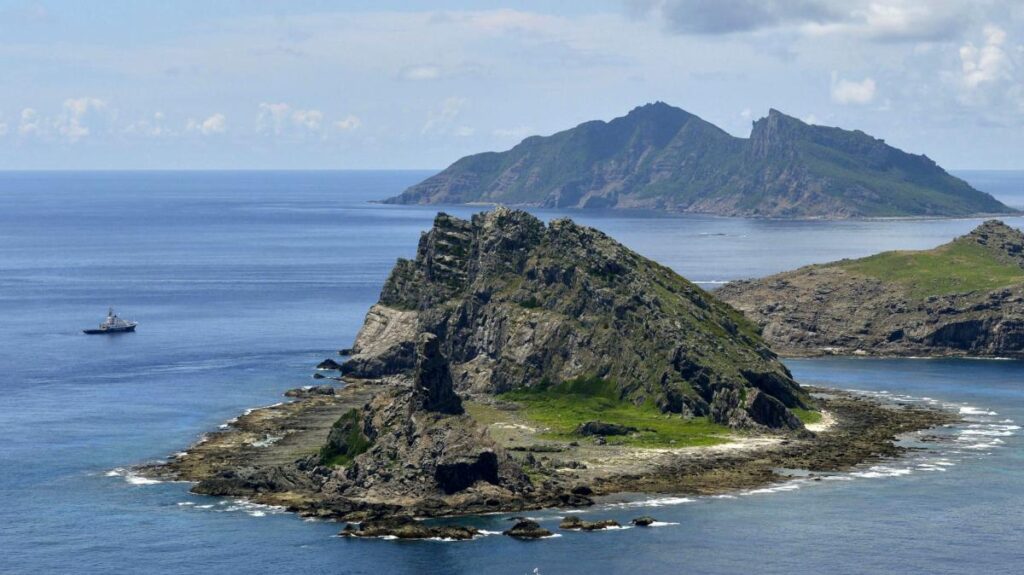
A massive, but flawed Fukushima/Tohoku response, the Senkaku islands confrontation with China, proposed amendments to Japan’s post-war Constitution regarding its defense capabilities, developments in relations with other regional militaries, the successful “Dawn Blitz” joint amphibious landing at Camp Pendleton with U.S. Marines, and then the Abe/Yasukuni visit…. what is actually happening on Japan’s military side that many are  missing?

This program is about a new Japanese military with new, enhanced capabilities that have been achieved with remarkable speed over the past 18 months.

This week, Grant Newsham (formerly, Col. USMC), a Senior Research Fellow at the Japan Forum for Strategic Studies in Tokyo and formerly the U.S. Marine liaison officer with the Japan Self Defense Forces joins “Asia in Review” Host David Day for a fascinating discussion on this topic.

Mr. Newsham is also a former diplomat with the U.S. Embassy in Tokyo and formerly a Director of a major Tokyo financial firm.

China’s Next Moves Following its East China Sea ADIZ

By All Southeast Asia, Blog, China, China, Critical National / Regional Security Issues, Foreign Policy/Geopolitics, Japan, Japan, Korean Peninsula, Military, Mongolia, Northeast Asia, Our Media, Philippines, PRC/China, Regional Security/Flashpoints, Russia, Russia, Senkakus, South China Sea Claims, South Korea, South Korea, Taiwan Straits, Vietnam, Vietnam

So what are China’s next strategy moves in the Asia-Pacific Region? What does the PLA really think about the U.S. military and its capabilities? –a bizarre perception that encourages them to push harder now.

China has now been successful at establishing its Air Defense Identification Zone (ADIZ) in the South China Sea. In the process, we have seen a bizarre, almost schizophrenic, series of contradictory communications on the subject coming out of Washington that have enhanced China’s successful roll-out.

Following the roll-out,  China’s lone aircraft carrier (sans aircraft) departed for the South China Sea for a “show the flag” cruise. Next, we witnessed a near collision by U.S. and Chinese naval ships in the South China Sea.

This program is Part 2 of the conversation between  David Day and China-Hand Michael Sacharski. Mr. Sacharski has spent some 3+ decades in China, met and worked with various members of its leadership and has fascinating perspectives to share about China’s ADIZ planning & gameplan, its unexpected success in the imposition of its new ADIZ in the East China Sea, and what strategic moves we can now expect China to make in the Asia-Pacific Region in the near term. Mr. Sacharski is the CEO of Pacific Enterprise Capital.

China’s New ADIZ

By Blog, China, China, Critical National / Regional Security Issues, Foreign Policy/Geopolitics, Japan, Japan, Korean Peninsula, Military, Northeast Asia, Our Media, PRC/China, Regional Security/Flashpoints, Senkakus, South China Sea Claims, South Korea, South Korea, Taiwan, Taiwan Straits

Are there unusual crossovers of the new China ADIZ (Air Defense Identification Zone) with both Taiwan and South Korea? There are and the Taiwan piece is perhaps something that most people do not know.   Is China’s new ADIZ over the Senkaku islands a precursor to further ADIZs China may have in mind? What is this new Air Defense Zone that China has imposed in the East China Sea all about? How did we get here? What about the schizophrenic, wires-crossed responses coming out of the Pentagon and the State Department? 


[soliloquy id=”4254″]


Asia in Review” host David Day engages in a fascinating conversation with special guest Michael Sacharski. Mr. Sacharski has lived and worked in China as an American executive and entrepreneur for some 3+ decades and shares some interesting insights into the Chinese thinking behind this new strategy. Mr. Sacharski is the CEO of Pacific Enterprise Capital.

Russia’s Asia “Pivot” with Focus on Energy

By China, Economic Development, Economic Security/Development, Energy, Foreign Policy/Geopolitics, International Business, Intl Business in Asia, Japan, Korean Peninsula, Middle East, North Korea, North Korea, Northeast Asia, Nuclear, Oil & Gas, Our Media, PRC/China, Regional Security/Flashpoints, Russia, South Korea, Syria, Vietnam

     In this broadcast,“Asia-in- Review” Host Hong Jiang explores Russia’s recent foreign policy and geopolitical shifts into Asia followed by its fascinating energy moves into the Region with international business lawyer & professor,  David Day.

[soliloquy id=”4152″]

     The program starts with the recent Russian foreign policy moves into the Middle East after the U.S. Syria debacle, followed by the new Russian military arms sales to Egypt, and some discussion of Russia’s client nuclear state, Iran. The Russian geopolitical moves into Asia are next, as Hong Jiang discusses with Mr. Day, Putin’s recent trip to Vietnam, along with Russia’s  (1) Kilo class submarine sales to Vietnam,(2)  mutual defense pact, and then (3), new joint venture operations between Vietnam’s PetroVietnam and Russian energy companies for joint oil & gas exploration efforts in both the South China (“East Sea” in Vietnam) and the Artic Seas.

     Next, the conversation turns to the critical and fascinating energy “pivot” that Russia is now engaged in, shifting its focus from its former European gas and oil pipeline customers to new pipeline developments with Japan, South Korea, and yes, even North Korea.

     Russia’s foreign policy regarding The Korean Peninsula is also probed.

Taiwan (Republic of China) at a Dangerous Crossroads

By All Southeast Asia, Blog, China, Critical National / Regional Security Issues, Foreign Policy/Geopolitics, Japan, Military, Our Media, PRC/China, Regional Security/Flashpoints, South China Sea Claims, Taiwan, Taiwan Straits


America’s relationship with Taiwan has waxed and waned since 1949, when Nationalist forces fled there following defeat by the Communists on mainland China in a lengthy and bloody civil war. 

Kerry Gershaneck, former US Marine Officer stationed in Taiwan

Kerry Gershaneck, former US Marine Officer stationed in Taiwan

Following this disastrous defeat and retreat, the US provided the security umbrella and economic incentives that helped propel the Taiwan into one of Asia’s leading economic “Tigers”.  Taipei, in turn, supported US foreign policy and military policies.  In recent years, however, a number of factors have caused that once-close relationship to drift.  Some analysts say that actions by Taiwan and the US have placed Taiwan on a trajectory towards absorption by the PRC. 

 As one analyst noted, “Taipei is doing more damage to its own ability to deter mainland coercion and military attack than any weapon the People’s Liberation Army could conceive. This damage represents a serious threat to Taiwan’s national security, and by extension to the national security of the U.S. and Japan.” And the U.S., for its part, appears increasingly ready to sacrifice its national security and regional stability–and its fundamental beliefs as a nation–by refusing to reverse this drift.

[soliloquy id=”3076″]

David Day hosts this illuminating conversation with Kerry Gershaneck, a former US government official previously responsible for both “front line defense” of Taiwan and for developing key security cooperation programs with its military forces.


The Taiwan Success Story

By All Southeast Asia, Critical National / Regional Security Issues, Economic Development, Foreign Policy/Geopolitics, International Business Education, Intl Business in Asia, Japan, Our Media, Philippines, PRC/China, Regional Security/Flashpoints, South China Sea Claims, Taiwan, Taiwan Straits, Vietnam

In this televised, “Asia in Review” Broadcast, David Day engages Taiwan expert Prof. William Sharp in a lively discussion about Taiwan’s historic background, democratic institutions and structure, strategic challenges with China (including the South China Sea dispute), and its delicate relationship with the United States.

Bill Sharp and David Day on “The Taiwan Success Story”

Confrontation in the Koreas: Where is the Solution?

By China, Critical National / Regional Security Issues, Disaster Prep & Humanitarian Aid, Economic Development, Foreign Policy/Geopolitics, Intl Business in Asia, Japan, Korean Peninsula, Military, Mongolia, North Korea, North Korea, North Korea, Northeast Asia, Nuclear, Our Media, Pacific Forum CSIS, PRC/China, Regional Security/Flashpoints, Russia, South Korea

This is Part 2 of the television series of discussions between Pacific Forum, CSIS’s Dr. Kevin Shepard and international Lawyer David F.Day on the complex issues behind the confrontation between the Koreas. This in-depth discussion includes and examination of the humanitarian crisis facing the international community should North Korea collapse, China’s 3 province economic policy and its impact on China’s view of North Korea, and the beginnings of private sector investment in North Korea.