
David Day is the principal speaker in a national webinar entitled, “China’s BRI Initiative in a Post-Covid World” which can be viewed here: https://www.youtube.com/watch?v=aCJRlNqNKws
June 20, 2020 Presentation by David Day in a national webinar, “The Digital Silk Road,” which can be viewed here: https://www.youtube.com/watch?v=bmAuOaYObWs
A Move to Protect its own Supply Chains.” This article was published nationally and distributed by the National Association of District Export councils. You can access the full piece here:
Presentation by David Day in a national webinar, “The Digital Silk Road,” which can be viewed here: https://www.youtube.com/watch?v=bmAuOaYObWs
Interview of David Day by the National Association of District Export Councils in an hour-long webinar program entitled, “China BRI: Update on its Business, National Security and Geopolitical Impact.” The video and PowerPoint discussion can be seen here: https://www.youtube.com/watch?v=ylJw5F2uj9g
A Move to Protect its own Supply Chains.” This article was published nationally and distributed by the National Association of District Export councils. LINK NEEDED
 Of Counsel

An international lawyer involved in numerous commercial projects in the US, China, Central America, and Southeast Asia, Dr. Chan is CEO of the Global Risk Mitigation Foundation and General Counsel for a US based company, overseeing compliance, employment issues, and risk management for corporate projects in the United States and Southeast Asia.
Elizabeth is experienced in complex business and commercial litigation and financial law.
Dr. Chan has also been involved in trade, import/export, and agriculture development/food security projects in the Asia-Pacific region. Among her Southeast Asia- based projects, Elizabeth has provided risk assessment and management for an agriculture social entrepreneurship, focusing swine farming and food security. She has also worked with infrastructure development, as well as risk assessment for corporate expansion in Southeast Asia.
Elizabeth is a member of the District of Columbia Bar Association and the Hawaii State Bar Association. She is a graduate of Georgetown University, with a JD from the University of Hawaii, LLM in Corporate and Financial Law from the University of Hong Kong, and an EdD from the University of Southern California.
She is fluent in Cantonese and Mandarin.
Dr. Chan’s practice areas include the following:
-
- Business and Commercial Litigation
- General Business and Corporate
- Risk Assessment, Mitigation & Management for international and domestic projects (more about her risk mitigation expertise & involvement here)
- Inbound Foreign Investment
- Outbound U.S. Investment in the Asia-Pacific Region
U.S. Real Estate
-
- Financial technology (FinTech)
- International Business
- International Litigation
- Business Negotiations – (Both Domestic & International)
- Export/Import Development
- Entertainment Law
- Business Immigration
- Intellectual Property
- Probate, Estate & Trust Matters
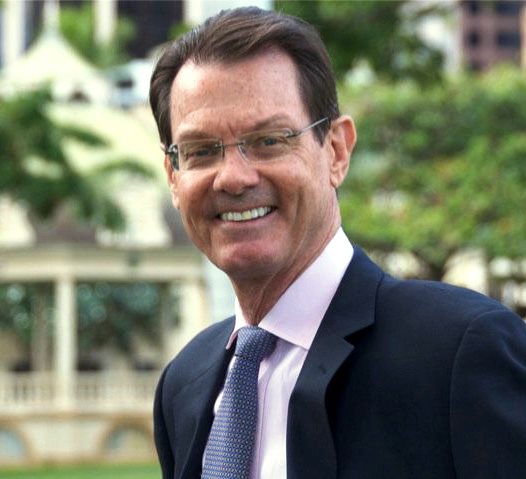
David Day is one of the Asia Pacific Region’s leading international legal practitioners, with special emphasis on Asia and based in Hawaii. He was recently appointed as the Chairman of the Belt & Road Task Force of the American Bar Association’s International Section.
As a U.S. business lawyer, Mr. Day has been on the ground extensively throughout Asia in deal-structuring and negotiations and is currently involved in a variety of commercial projects in the Philippines, Indonesia, Vietnam, Singapore, China and Japan.
In recent months, David has provided a number of speeches and detailed briefings on China’s Belt & Road Initiative, the new U.S. Indo-Pacific Strategy, current U.S. Trade Policy, the South China Sea, the rise of radical Islam in Southeast Asia, and the challenges and security implications for the post-war reconstruction of Marawi City, Mindanao for both the Philippines and the Indo-Pacific Region. These briefings have been before Asian Cabinet-level Ministers, think tanks, diplomatic teams at U.S. and Asian Embassies and Consulates along with private sector business groups and conferences in both the U.S and Asia.
In addition to cross-border work representing nationals and firms from these countries along with American firms operating in each other’s markets, Mr. Day continues to handle various commercial, corporate, international business and complex litigation matters in Hawaii, on the U.S. Mainland, throughout Southeast Asia and the Pacific Islands Regions (a more specific delineation of legal expertise can be found here.). His extensive experience includes wide variety of fields, including high technology, software and telecommunications.  Mr. Day’s clients have included Fortune 500 firms, Asian foreign governments, as well as, technology, securities, industrial/manufacturing, construction, airline, resort, tourism, software, real estate development, mining, entertainment, and education firms. He has represented the interests of the Japanese government in Washington. The client mix has ranged from individual entrepreneurs to Fortune 500 companies.

Moderating a U.S. Indo-Pacific Command (PACOM) Seminar before U.S. Military leadership on the Future of China’s Economy Mr. Day is also a frequent speaker on legal, international business, foreign policy and geopolitical topics at conferences and symposiums throughout the Asia-Pacific Region including the U.S. Mainland, Hawaii, and the Pacific Islands. He is also a frequent speaker and faculty leader on international business and legal topics at executive and MBA-level courses and symposiums throughout the Asia/Pacific Region.
International & Domestic Risk Mitigation and Management
The Global Risk Mitigation Foundation is an organization that enhances and protects all stages of international and domestic projects and organizations by assessing viability and feasibility, together with associated country and regional risks. It utilizes global experts in widely diverse fields providing comprehensive risk analyses and risk management in a whole host of fields and focus areas: sensitive technology, anti-corruption, geopolitics, organized crime, counter-terrorism, legal, education, cultural, construction, disaster, logistics/sustainment, and financial integrity. Mr. David Day serves as the Foundation’s Chairman of the Board.
China’s Belt & Road Initiative and the Competitive Responses by the United States and Other Nations
Mr. Day is the Chairman of the American Bar Association’s Belt & Road Task Force. This new international ABA program is focused on the legal challenges and opportunities posed by China’s Belt & Road Initiative as well as the response by the United States and other nations. The Belt & Road Task Force deals with complex issues that run the gamut from international business & trade, needed hard and digital infrastructure development of smaller & poorer nations, geopolitics, corruption, espionage and national security.
International Trade, Trade Policy and Export Development
Following his nearly decade-long work with the export and business development work of the Hawaii Pacific Export Council, Mr. Day is the Chairman of the Trade Policy Committee of the U.S. National Association of District Export Councils (there are some 61 DEC organizations around the country which represent SMEs and MMEs) and a member of its National Board of Directors. Mr. Day represents the entire Pacific Region and the Southwestern U.S. for the NADEC organization. He also continues to serve as a Director of the Hawaii Pacific Export Council (and its former Vice-Chair).
Initiating the Vietnam Bilateral Trade Negotiations
In 1997, as a private citizen, Mr. Day brokered the very first public discussions on the subject of a possible Bilateral Trade Agreement between Ministers of the Socialist Republic of Vietnam and senior officials of the U.S. State and Commerce Departments (within 3 months of these first discussions which David initiated, the United States produced the very first rough draft of a trade agreement and transmitted it to Hanoi—it was ultimately put into effect some 3 years later).

Chaired by David Day: 1st Public Discussions on Future BiLateral Treaty – U.S. & Vietnam, Honolulu, January, 1997
Alternative Dispute Resolution: Arbitration & Mediation Expert
Widely recognized in the field both domestically here in the U.S. and internationally, David Day has trained professional international arbitrators and conflict resolution experts (lawyers, solicitors, business executives and subject matter experts) all over the Asia Region. He also pioneered the development of mediation and conciliation in both Singapore and Malaysia, training their very first panels of mediators.
A Fellow of the Chartered Institute of Arbitrators (London), Mr. Day has served as the Chairman or Sole Arbitrator in many U.S. domestic and international arbitrations administered by the American Arbitration Association and the International Court of Arbitration (ICC) in Paris. For example, the Singapore International Arbitration Center selected Mr. Day as the international arbitral Chairman in a large dispute between companies located in the U.S., India and Mauritius.
David Day was one of the very first 7 Americans recognized and empaneled as an international arbitrator in the People’s Republic of China in the early 1990’s and is one of only 45 Americans named as global arbitrators in the International Who’s Who of Commercial Arbitrators published by Law Business Research.
In the Fall of 2010, David Day was selected to serve on the Panel of international arbitrators of the Kuala Lumpur Regional Centre for Arbitration which handles commercial project disputes from Southeast Asia, the Middle East and certain African countries.
Philippines:
Beginning withThe Peoples Power Revolution on EDSA during the Corazon Aquino era and continuing
Mr. Day worked with the Aquino forces during the People’s Power Revolution in the Philippines during the mid-1980’s and was the legal counsel for several Ministers in the new government after the departure of Ferdinand Marcos. He is the only American to receive a commendation from the Filipino NGO, NAMFREL, for his contribution to the development of democracy and freedom in the Philippines.
This engagement with the Philippines continued throughout most of his career and, beginning in the early 2000s, David worked on Abu Sayaaf-blocking, counter-terrorism/humanitarian projects in Jolo, Sulu, and on Mindanao. That engagement continues even in current projects which are both humanitarian and counter-terrorism in nature.

Vietnam:
Anti-corruption & Business Integrity
In 2006, Mr. Day was asked by the both U.S. State Department and the U.S Embassy in Hanoi to serve as a principal spokesperson with the Vietnamese for programs and discussions on ways to cut back corruption.
Following this initial foray in Vietnam on this highly sensitive topic, in the Fall of 2008, David then proceeded to conduct the pioneer training of Vietnamese executives in anti-corruption, business ethics and good-governance in Ho Chi Minh City as a part of Hawaii’s Shidler College of Business Vietnam ExecMBA program. He has continued these much-needed and highly-effective anti-corruption and business integrity trainings in Vietnam with the latest renditions in Hanoi and Ho Chi Minh City in the Fall of 2012.
Indonesia:
Trade & Business Development
Mr. Day has been one of Hawaii’s key leaders from the private sector in the negotiation and development of the State of Hawaii’s Sister-State relationship with the island and province of Bali, Indonesia.
Mr. Day is also a Founding Director and the Chairman of the Board of Directors of the Hawaii Indonesia Chamber of Commerce (HICHAM) which focuses on the development of trade between Indonesian firms and the Hawaii business community.
Media Host and International Affairs Commentator
David Day has also been a frequent television media talk show host on topics relating to international business, foreign policy, national security and geopolitics. 
A partial archive of television programs hosted by Mr. Day can be found under “Our Media” above on this website. Mr. Day’s media guests have ranged from senior U.S. officials at the Deputy Secretary level, well-known Hawaii and Asian business executives, executive educators, think tank experts, top U.S. military officials (both active duty and retired), as well as senior Asian political leaders.
Faculty & Executive Educator
David Day is also been a business school professor and has taught at the Undergraduate, MBA and Executive MBA levels in the U.S. and in Asia (the University of Hawii’s Shidler College of Business and Hawaii Pacific University’s College of Business, the Hanoi School of Business, the Asia Pacific Center for Securities Studies in Waikiki, and at the Yonsei University and SungKyunKwan Schools of Business in Seoul, Korea).
As a business school professor, Mr. Day is well-known for his intense courses and programs in Cross-cultural, International Negotiations and his trainings for Asian executives on How to Negotiate and Work with Americans. He has trained numerous groups of Japanese executives, Chinese diplomats, South Korean executives and MBA candidates, as well as Vietnamese government and private sector executives on this topic of engagement with Americans and American business.
Prof. Day has been a frequent presenter at the Asia Pacific Center for Security Studies in Waikiki before senior military officers and diplomats from around the Asia Region on issues that impact the business interests of the private sector and the linkage of those business issues with security.
See also our Linkedin Profile at: http://www.linkedin.com/in/davidfday
July 30, 2014
(Originally published by the Center for Strategic and International Studies (CSIS) and can also be found also at: https://www.csis.org/analysis/pacnet-62-indonesia%E2%80%99s-john-adams-moment )
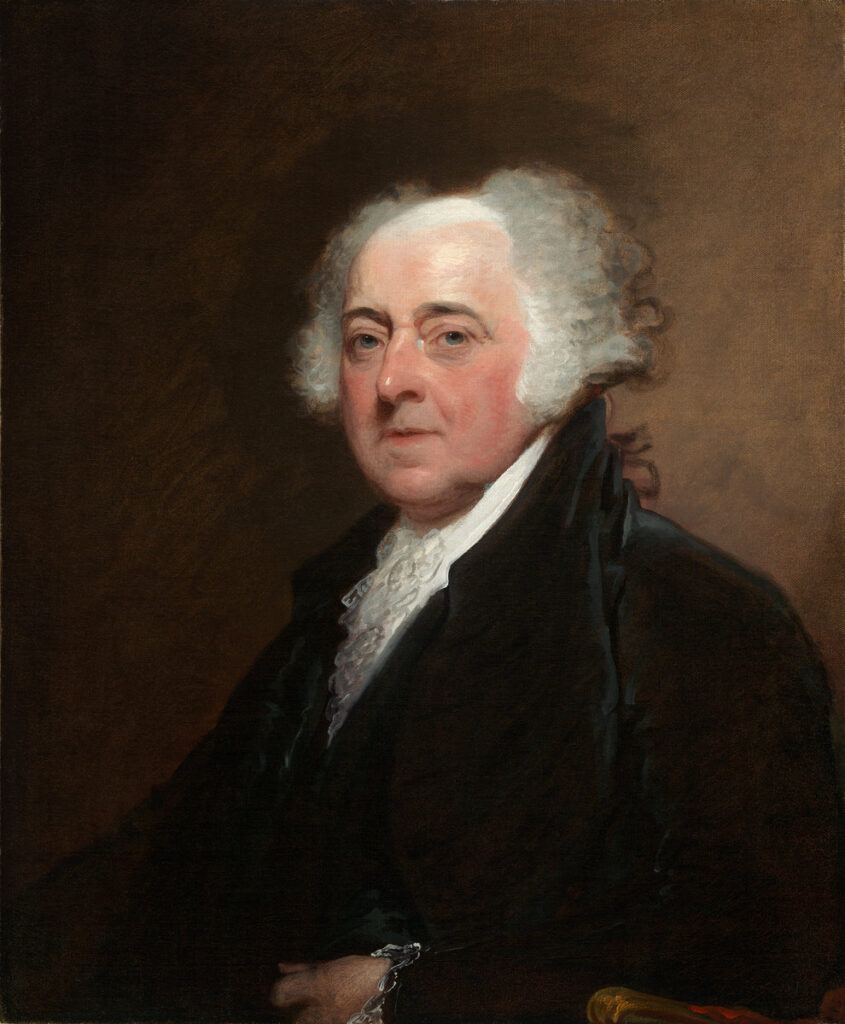
There was a moment of time in our own history, when our new democracy peaceably and orderly passed the reins of power from George Washington, at the end of his second term, to John Adams. It had never happened before in history. The “John Adams Moment” firmly established
the precedent  in the new, American democracy, of a Presidency limited to only 2 terms. That tradition lasted up until the time Franklin Roosevelt and was resumed thereafter by Constitutional Amendment. It was a transition moment when the country broke away peacefully from a military/civilian leader, Washington, to a purely civilian leader, John Adams. Our own “John Adams Moment” set the tone and the tradition for generations that followed. Indonesia, following its recent divisive election, is at a similar, “John Adams Moment” in the strengthening of its own new democracy. President Susilo Bambang Yudhoyono (SBY), a military/civilian leader, will step down after his own 2nd term this coming October, and relinquish power to a new, duly- elected civilian President, Joko Widodo (Jokowi). This is a historic, critical step in the development of Indonesia’s own, young democratic traditions.
The Indonesian democracy has developed out of the dark, bloody days of rioting and violence in the wake of the collapse of the Thai baht and the Asian Financial crisis in 1997-98. The financial implosion of Indonesia’s rupiah occurred along with the dismantling of the autocratic and highly corrupt Suharto regime. Since that time, Indonesia has re-invented herself in a little over a decade and a half, repaired her devastated economy, and has now emerged as a robust democracy in Southeast Asia, with a plethora of newspapers, talk shows, media sources, and strong voter participation. It is impressive progress in less than two decades.
The recent Presidential election campaign was a hard-fought battle, but free of violence. And, although religion is never entirely absent from Islam’s foremost democracy, this was a contest fought overwhelmingly over secular issues.
Jokowi, represents a marked departure from Indonesia’s past. He started out as a small business owner, a humble furniture seller, and became a pragmatic, uncorrupt mayor. He is not from the usual clutch of political and business dynasties and their sleazy cronies. He represents something new for Indonesia. The 53-year-old is the first of a political generation reaching the national stage since popular protests in the late 1990s that toppled Suharto. Jokowi’s rise would have been inconceivable without the radical political decentralisation which is perhaps the outstanding success of Indonesia’s democratic journey. He began his political career as mayor of Solo, a medium-sized city in Java, the most populous island, before becoming an immensely popular Governor of Jakarta, the capital, in 2012. It is there that he forged a reputation for can-do competence and clean government that won the admiration of many and propelled him into the Presidential race.
Jokowi has a good record of dealing with the concerns of ordinary Indonesians: clogged traffic, poor sanitation and petty, bribe-taking bureaucrats. He is also more comfortable working with Christians or ethnic Chinese than most Indonesian politicians have been and are. Indeed, his opponents tried to turn his hostility to religious intolerance against him by claiming that he was in fact a Christian. Certainly, Jokowi is a new kind of Indonesian leader, but he is still a devout Muslim. In the three days before actual election in which Indonesian law forbids campaigning, Jokowi made a lightening pilgrimage to Mecca. But he also embraces religious pluralism. And, though no room exists on the Indonesian political spectrum for anything like economic liberalism, he is less of an economic nationalist than his opponent in the election, former Special Forces General, Prabowo Subianto, once Suharto’s son-in-law with a tainted human rights record, a throwback to Indonesia’s darker past.
Foreign investors are now pleased with the Jokowi victory. He understands the need to cut ruinous fuel subsidies and to boost education.
The big worry about Jokowi is that he might be out of his depth in high politics. That is partly because he lacks experience: his views on foreign policy are still barely known. His campaign was amateurish, relying mainly on the perhaps, naive assumption, that honesty and an impressive record would be good enough. It turns out that Jokowi was right; Indonesians did not buy the slick, orchestrated campaign of General Prabowo. Jokowi is a man of the streets and neighborhoods, whereas past Indonesian leaders have ruled from on high. He has no ties to the Suharto regime, unlike most of his predecessors, and that represents a clean break.
Jokowi has been underestimated before. Indonesia faces a geopolitical challenges with China over its Natuna islands in the South China Sea along with its ASEAN leadership demands and international economic challenges. Standing still will not be the easiest option. Indeed, his capacity to attract powerful technocratic advice could see Jokowi pursue a more proactive and internationalist agenda than his predecessors.
Jokowi’s endearing trait—his humility—turned into a liability during the campaign as his image as an outsider was compromised by his reliance on his party’s grande dame, Megawati Sukarnoputri, the daughter of modern Indonesia’s founder and a former President herself. She has appeared on occasion to be grudging in her support for Jokowi. This reliance is likely to fade in time as Jokowi makes his own mark.
There is a leadership trait which Jokowi possesses which is both visionary and courageous. As the world’s 4th largest country, and a Muslim-majority one at that, the ethnic Chinese have been the political scapegoats forever. During the Suharto years, a drive through Jakarta’s Chinatown, Kota, was remarkable for its lack of Chinese characters, symbols, architecture and even names in English—the ethnic Chinese were literally hidden from view. The bloody anti-Chinese riots (which General Prabowo is said to have encouraged) in Kota and elsewhere left deep cultural wounds. Jokowi is the first Indonesian politician to actively begin the healing process. When he ran for the Governorship of Jakarta, Jokowi had the courage to have an ethnic Chinese, Basuki Tjahaja Purnama (Ahok) as his successful running mate. That was a historic first for Indonesia and it bodes well for Jokowi’s reputation as a cultural healer, a nation-builder, and a diplomat. Interestingly, Ahok now succeeds Jokowi as the Governor of Jakarta.
In the end, Indonesians, made the right choice. Jokowi will be a disruptive figure in in that he will have to learn to work with, and begin to breakup, the old political oligarchy, upgrade the bureaucracy, work the corruption problem, develop civilian control of the military, and continue to strengthen this fledgling democracy.
This is Indonesia’s “John Adams Moment.”
(David Day is the Chairman of the Board of the Hawaii Indonesia Chamber of Commerce and an international business lawyer).
A massive, but flawed Fukushima/Tohoku response, the Senkaku islands confrontation with China, proposed amendments to Japan’s post-war Constitution regarding its defense capabilities, developments in relations with other regional militaries, the successful “Dawn Blitz” joint amphibious landing at Camp Pendleton with U.S. Marines, and then the Abe/Yasukuni visit…. what is actually happening on Japan’s military side that many are missing?
This program is about a new Japanese military with new, enhanced capabilities that have been achieved with remarkable speed over the past 18 months.
This week, Grant Newsham (formerly, Col. USMC), a Senior Research Fellow at the Japan Forum for Strategic Studies in Tokyo and formerly the U.S. Marine liaison officer with the Japan Self Defense Forces joins “Asia in Review” Host David Day for a fascinating discussion on this topic.
Mr. Newsham is also a former diplomat with the U.S. Embassy in Tokyo and formerly a Director of a major Tokyo financial firm.
Recent Comments